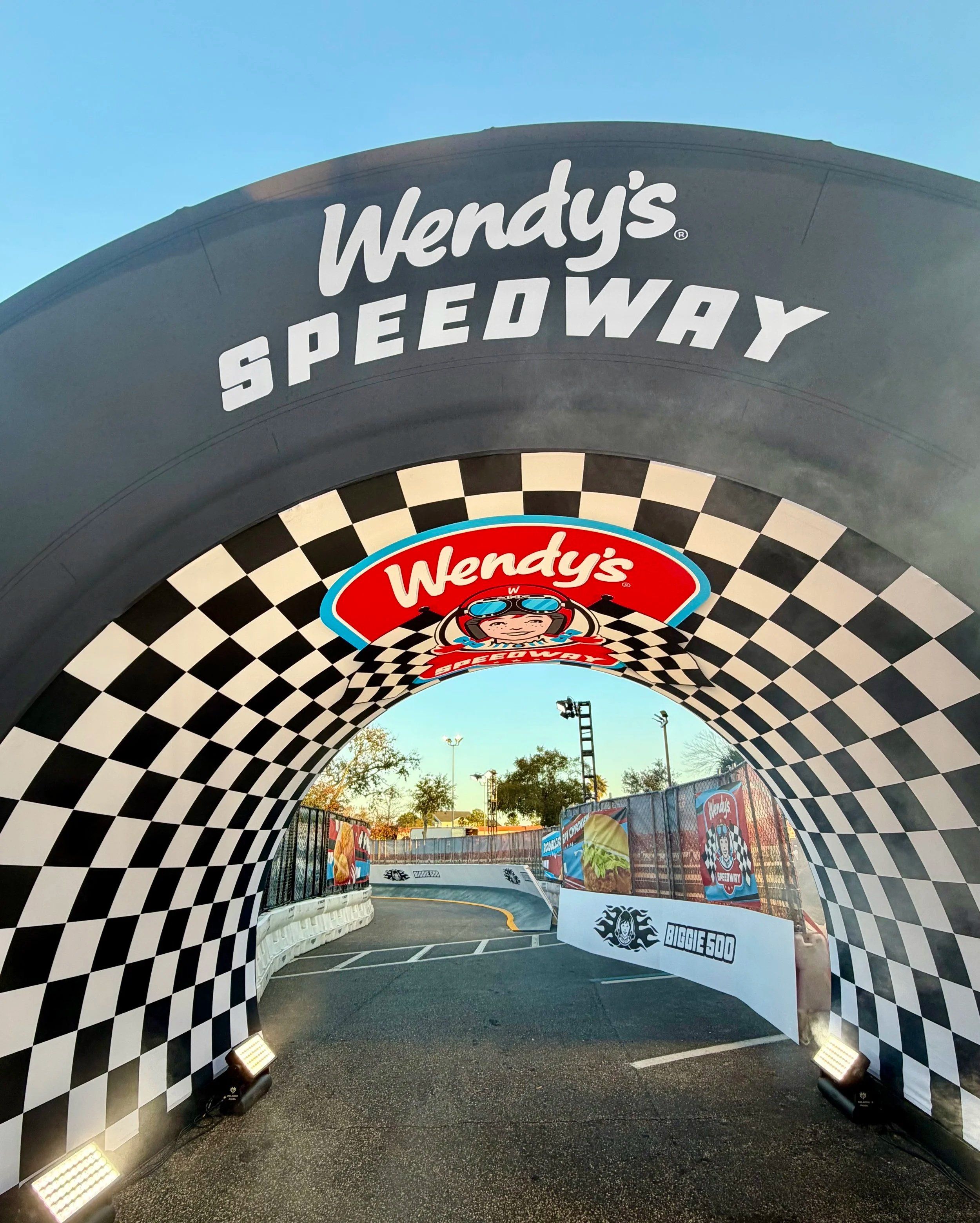
Over the past decade, experiential marketing has steadily moved from the margins of the marketing mix to the center of brand strategy. What began as a way to supplement advertising campaigns has evolved into one of the most effective tools available for building community, generating content, creating emotional connections, and driving customer engagement.
The industry's growth reflects that shift. Allied Market Research recently projected that the global events industry could reach $2.5 trillion by 2035. While forecasts should always be viewed with appropriate caution, the broader trend is undeniable: brands continue to invest heavily in live experiences at a time when digital channels are becoming increasingly crowded and difficult to differentiate within.
Yet the most important story is not the size of the market.
It is how the market is changing.
A growing number of agencies and brands are no longer thinking about experiential marketing as a series of individual events. Instead, they are building programs designed to reach audiences across multiple cities, multiple markets, and in many cases, multiple years.
The shift is subtle, but significant.
Historically, many experiential campaigns were local by design. A launch event in New York. A pop-up in Los Angeles. A sponsorship activation tied to a specific market. Success was measured by attendance, press coverage, and social engagement surrounding a single moment.
Today's campaigns increasingly operate on a different scale.
Brands are building touring activations, national sponsorship platforms, multi-city product launches, and community-driven experiences designed to create consistent engagement across diverse audiences. The objective is not simply to host an event. It is to create an experience ecosystem capable of generating awareness, engagement, content, and relationships over time.
Several forces are driving this evolution.
The first is audience behavior. Consumers are spending more time in digital environments than ever before, yet many brands are discovering that digital reach alone does not necessarily create meaningful connection. As artificial intelligence accelerates content creation and distribution, attention becomes more fragmented and differentiation becomes more difficult. In-person experiences remain one of the few channels capable of creating sustained engagement and emotional resonance in ways that are difficult to replicate digitally.
The second is the growing importance of major cultural and sporting moments. FIFA 2026 will bring unprecedented international attention to multiple cities across North America. The Los Angeles Olympic and Paralympic Games in 2028 will create years of brand, sponsorship, hospitality, and fan engagement opportunities. These events are not isolated moments. They are catalysts for broader experiential strategies that often begin years before opening ceremonies and continue long after the final matches conclude.
What is emerging is a new generation of activation programs that require both local relevance and national coordination.
For agencies, this presents a challenge. Creative concepts must remain consistent while adapting to different markets. Brand standards must be maintained across multiple environments. Fabrication, logistics, staffing, permitting, transportation, and production workflows must be coordinated at a scale that many organizations have not previously encountered.
As a result, many brands are reassessing how they structure their production partnerships.
For years, it was common to assemble different production teams in different markets. A local fabricator in one city. An AV provider in another. Separate project managers, separate vendors, separate processes. While that approach can work for isolated events, it often becomes increasingly difficult to manage as campaigns expand geographically.
A different model is beginning to emerge.
More agencies and brands are seeking production partners capable of supporting activations across multiple markets through unified teams, shared processes, centralized fabrication resources, and consistent operational standards. The appeal is not simply convenience. It is consistency. The ability to maintain creative integrity while reducing complexity has become increasingly valuable as experiential programs grow in scale.
This trend mirrors broader changes occurring throughout marketing and communications. Organizations are consolidating vendors, simplifying workflows, and looking for partners capable of supporting larger portions of the customer journey. Experiential marketing is following a similar path.
The companies that will be best positioned for the next decade are unlikely to be those producing the highest volume of individual events. They will be the organizations capable of helping brands create scalable experience platforms that operate seamlessly across markets while preserving the authenticity that makes experiential marketing effective in the first place.
From our perspective at Wizard Studios and VOX Productions, this evolution is already underway.
Following the recent merger of our organizations, we've had the opportunity to work with agencies and brands that are increasingly focused on national deployment strategies, cross-market consistency, and long-term experiential programs rather than isolated activations. The conversations are becoming less about individual events and more about systems, scalability, audience engagement, and operational continuity.
That shift may ultimately prove more significant than any market forecast.
The future of experiential marketing is not simply bigger than it was before.
It is more integrated, more strategic, and increasingly national in scope.
As brands prepare for the opportunities that FIFA 2026, LA28, and the next generation of audience engagement will create, the question is no longer whether experiential marketing deserves a larger role within the marketing mix.
The question is whether organizations are prepared to execute it at the scale the market now demands.